When we listen to the subtle messages and gentle suggestions, we can find both beauty and strength
In a noisy, crowded room, engaging in a conversation can be challenging. Instead of yelling, which can strain your voice and contribute to the commotion, it’s more effective to lean close to the person you want to communicate with and whisper. This strategy allows your voice to carry better in the noisy environment, making it easier for the person to hear you without raising your volume excessively. As a former teacher assistant and substitute the “LEAN IN AND WHISPER” worked every time! 🙂
Within us, all exists a gentle, quiet voice that doesn’t try to overpower the noisy mental chatter on the surface of our minds or drown out the clamor of the external world. Regardless of our surroundings or internal turmoil, we can always tune into this soft voice beneath the racket of noise if we wish to hear it.
Often, the dominant voices in our minds that convey messages of fear or anxiety are not entirely reliable. These voices may originate from childhood experiences or cultural influences and may only offer partial truths.
The urgency of some voices arises from their separation from the core of our existence. This urgency captures our attention. In contrast, another voice quietly whispers reassurance, conveying that everything is essentially okay. When we hear this voice, we recognize its truthfulness. Typically, after listening to its message, a profound sense of tranquility envelops us, and the once-dominant other voices and sounds recede into the background, appearing insignificant and distant.
As we delve into the world, our interactions may be affected by a tranquil assurance, a whisper of truth that pervades like the rustling of leaves in the wind. This whisper encourages us to prioritize our connection to this truth, steering us away from idle chatter. Embracing this quiet confidence, we become conduits of this whisper, transcending the noise of the world and fostering an atmosphere of peace, trust, and confidence. The first action to take is to get off of social media . . . For you! Find some quiet in this chaotic space.
Peace & Harmony, Cheryl ♥
Yours in Chaos to Calm, 𝓒𝓱𝓮𝓻𝔂𝓵
If you require more comprehensive guidance than the information provided here on my blog, consider my personalized Life/Organize coaching programs. Book a complimentary consultation to explore the factors hindering your journey toward organized living spaces. Together, we will identify your challenges and develop a tailored strategy to help you achieve your goals. I anticipate the opportunity to collaborate with you to transform your lifestyle.
Let’s Chat! Cheryl Camacho # 860-941-8630
A TEXT gets to me faster: Name, Issue, the Best time to call
Our surroundings can greatly influence our mood and emotional state. A thoughtfully decorated space that reflects our personal preferences and evokes positive emotions can uplift our spirits, promote relaxation, and reduce stress and anxiety.
Colors, lighting, textures, and natural elements in our decor can have a profound impact on our emotional well-being. You only need to buy a book or Google “Color Psychology” to learn the impact color has on the mind and that it’s quite significant. Look at the colors in the photo above – what do they make you feel? For me, energized and healthy. Imagine living around colors that give you the desired results in your mood. When you live in clutter it’s hard to find the colors that have impacted your life, all you see is overwhelm.
Stress Reduction
A space that reflects you can create a sense of calm and tranquility, providing an escape from the demands and pressures of daily life. When you come home and night and turn the key, you open your door to either a space that feels good or one that doesn’t. You want it to be your haven, your nest. By incorporating elements like comfortable furniture, soothing colors or at least colors that soothe YOU, and natural elements, you can create an environment that promotes relaxation and stress reduction. Do not forget to incorporate cleaning & organizing into your haven!
Productivity and Focus
Focus has become a major issue in recent years. Many people struggle to focus due to neurological reasons or poor choices, such as spending too much time on their phones, saying yes to too many things, or not eating a healthy diet. However, focus and productivity can be improved, even for those with ADHD, by creating an organized and positive environment. Cluttered and disorganized spaces can be distracting and hinder productivity, while a well-designed and organized space can enhance concentration, creativity, and efficiency.
Here are some tips for creating a more focused and productive environment:
Declutter your space. Get rid of anything that doesn’t serve you or that you don’t need.
Organize your space. Create a system for storing things so that you can easily find what you need.
Create a workspace that is free from distractions. This means turning off your phone, closing any unnecessary tabs on your computer, and finding a quiet place to work.
Take breaks. Get up and move around every 20-30 minutes to avoid getting too bogged down in one task.
Reward yourself. When you accomplish a task, give yourself a small reward, such as taking a break, watching a funny video, or eating a healthy snack.
Physical Comfort
Research has shown that physical clutter can create a lot of stimulation for your brain, making it difficult to focus on the task at hand. As a result, cleaning and organizing have been linked to a decrease in feelings of anxiety and an increase in comfort in your surroundings. Seeing clutter around you can be draining. Ergonomic furniture, adequate lighting, and good ventilation are all essential for creating a comfortable and healthy home. What is more important to you: a “social media” sofa or something you can snuggle up on with your kids and watch a movie? Additionally, adding some indoor plants can improve air quality and create a more pleasant and rejuvenating atmosphere. The natural element of bringing the outside in can also be very calming to our nervous system.
Personal Expression and Identity
Our home is an extension of our identity and personal expression. I know it sounds like the opening of a decor book. But it’s true. Decorating our space in a way that aligns with our values, interests, and aesthetic preferences can foster a sense of belonging and enhance our overall well-being because we are allowing ourselves to open up and show who we are. It allows us to create an environment that reflects who we are and supports our emotional and psychological needs even if that’s a rainbow unicorn Squishmallow on our bed (it can go in the closet when guests visit – haha), or a stack of Business & Design books by the bed with our favorite candle, the home isn’t a museum – it’s a nest, a nurturing, beautiful place of refuge and love.
Social Connections and Relationships
What happens when you love your home? You automatically want to share it with others! A home that you like can also facilitate social connections and positive relationships. A welcoming and inviting atmosphere can encourage social interactions, bonding, and a sense of community. Your gatherings can leave memories that get almost stamped into your home for years to come. I always remember every birthday party for my son, the day I brought him home from the hospital and gave him a little home tour through each room, and the great meals I’ve served. When our spaces are comfortable and visually appealing, we are more likely to invite others in and foster meaningful connections.
Mindfulness and Self-Care
Organize & Design for well-being involves a mindful and intentional approach to creating a space that supports self-care. It encourages us to prioritize our own well-being and design our environment in a way that promotes relaxation, mindfulness, and self-reflection. By incorporating elements like cozy corners, meditation areas, or inspiring artwork, we create reminders to take care of ourselves and nurture our mental and emotional health. I have a Prayer corner in my Micro-Workout space, so I actually do it more now because it reminds me of what matters each day since it’s the first corner I see when I wake up and the last one that I see before bed.
Organizing for well-being is important because it can positively impact our mood, reduce stress, enhance productivity, improve physical comfort, support personal expression, foster social connections, and encourage self-care. I mean, what’s not to love about focusing on well-being when you take on your next home project? By intentionally creating a space that nurtures our well-being, we can experience a more balanced, harmonious, and fulfilling life, and don’t we all deserve that?
𝓟𝓮𝓪𝓬𝓮 & 𝓗𝓪𝓻𝓶𝓸𝓷𝔂 ~ Your Organizer & Coach, Cheryl
If you are seeking further guidance beyond this post, my personalized coaching programs may be of assistance to you. Please book a complimentary session to discuss what is holding you back. I look forward to guiding you on your journey to achieving organized spaces in your lifestyle.
NEW PHONE # 860-941-8630
A TEXT gets to me faster: Name, Issue, the Best time to call
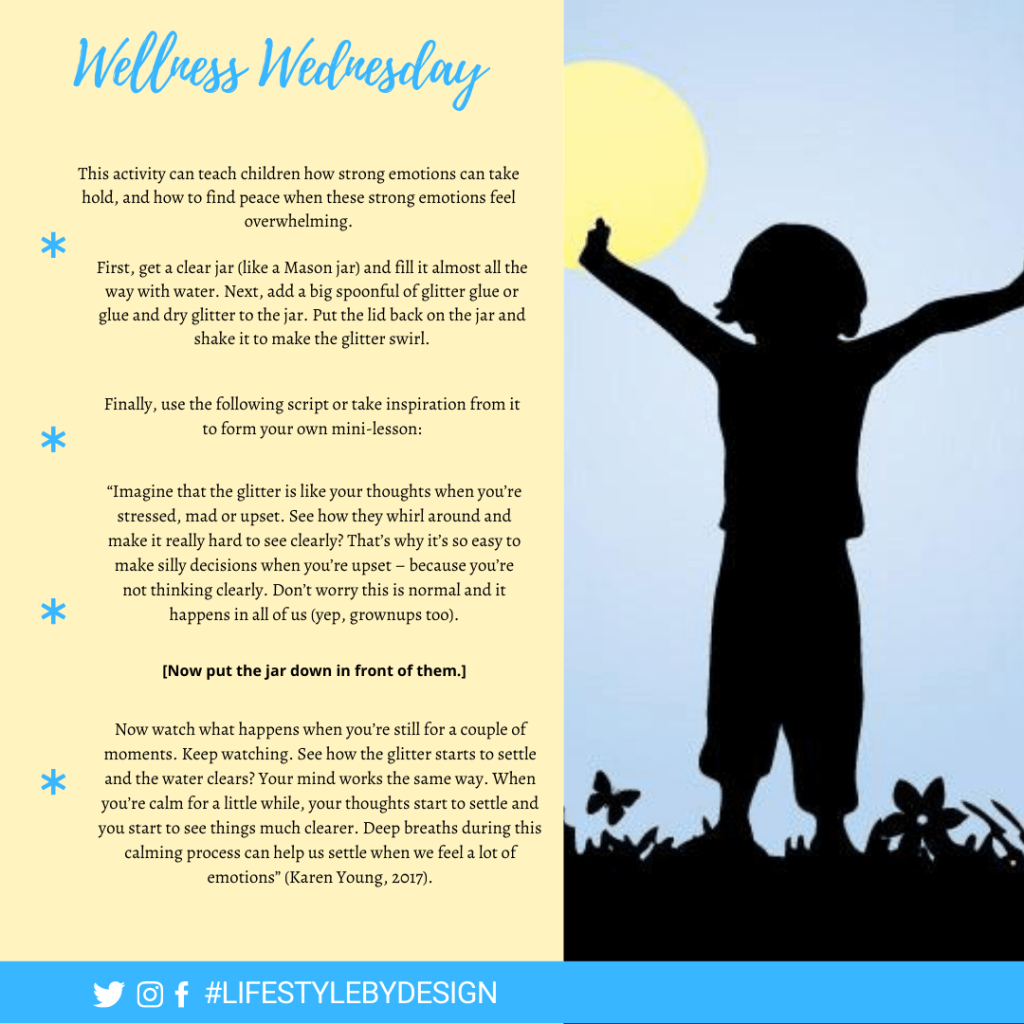
This mindfulness exercise I have used in my classroom with great success with children that were having a tough time calming themselves at certain times of the day.
This exercise not only helps children learn about how their emotions can cloud their thoughts, but it also facilitates the practice of mindfulness while focusing on the swirling glitter in the jar.
Try having the kids focus on one emotion at a time, such as anger, and discuss how the shaken verse settling glitter is like that emotion.
If you leave the jar where they can use it with assistance (if glass) it will be a tool they will reach out for in those moments they are struggling.


 Lifestyle-by-designs